




Digital printers have revolutionized the entire textile design industry. Screen printing and appliqué sewing still have their place for some fabrics and one-off multi-dimensional items, but digital printing is fast, economical and offers endless versatility.
Digital printing applies itself well to many different substrates – vinyl, polyester, mesh, blends and other materials. Digital signage is suitable for indoor or outdoor use.
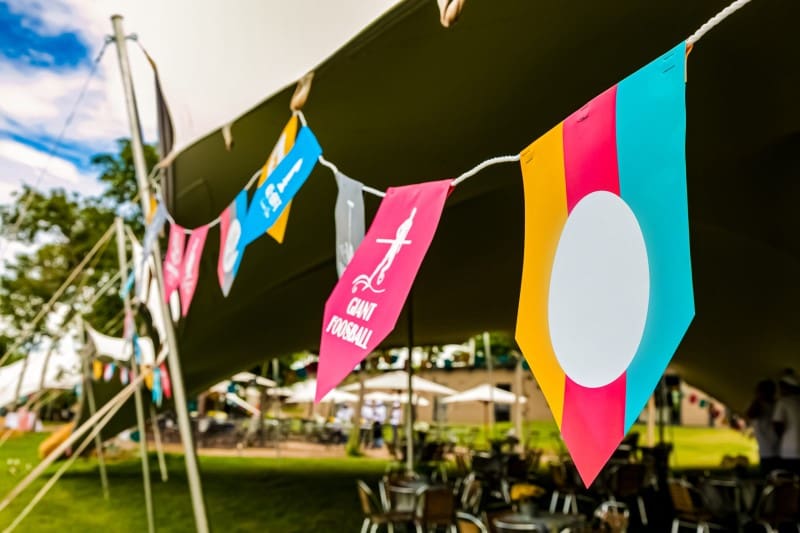
For polyester flags and soft banners, dye-sublimation transfers ink directly into the fabric fibres using heat, so the design becomes part of the fabric rather than sitting on its surface. This produces vivid colour, a design visible through to the reverse side, and a finish that resists cracking or peeling under repeated flexing.
For heavier banners, signage, and certain display materials, ink is applied directly to the surface of the material — a strong option where single-sided visibility and high-resolution surface detail matter most.
For products intended for extended outdoor exposure, UV-stable ink formulations are used to slow the colour fading that comes from sustained sun exposure, extending the usable life of a printed piece.
Send us your design, along with the intended use and any deadline you’re working against, and we’ll confirm the right printing method, turnaround, and finish for your flag, banner, or signage order.
Dye-sublimation is a specific type of digital printing used for polyester fabric. It uses heat to transfer ink directly into the fibres. Digital printing is the broader category that also includes direct-to-vinyl and direct-to-fabric methods used for banners and signage.
Digital printing offers strong colour accuracy, and we work from your specified brand colours to get as close a match as the print process and fabric allow. We’ll confirm this with a proof before full production.
Yes, this is one of digital printing’s core strengths, and it’s the method used for photo flags, personalized keepsakes, and any design requiring photographic detail.
Digitally printed orders generally move faster through production than appliquéd flags, since there’s no hand-cutting or stitching involved. This is useful when you’re working against a tighter deadline.
Over long-term continuous outdoor exposure, appliquéd flags generally hold their colour longer since there’s no printed ink to fade. UV-stable inks help close that gap for digitally printed flags, but for flags flying outdoors year after year, appliqué remains the more durable option.
Yes, in some cases a design might use appliquéd solid-colour shapes for the main design elements and digital printing for fine detail, text, or gradients within the same piece. Let us know your design and we can advise whether a combined approach makes sense.